

A Stone Fireplace in Your Interior: Marble, Granite or Travertine?
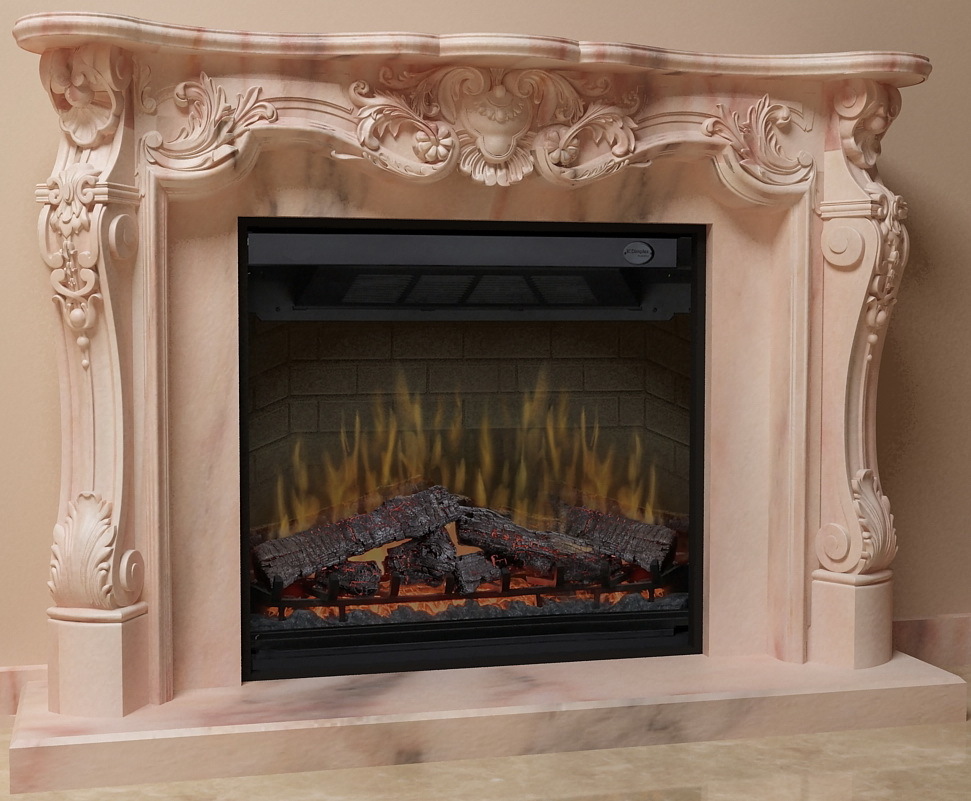
A fireplace is the natural heart of a living room. People gather around it, watch the flames, and their eyes keep returning to it even when there is no fire. That is why the choice of material deserves as much attention as the firebox itself. Stone gives a fireplace weight, calm and longevity, but every type behaves differently – with heat, with soot and with everyday cleaning. Let us look at how to choose between marble, granite and travertine.
What stone around a fireplace has to withstand
The area around the firebox is stressed differently from a kitchen top or a floor. The surround heats up from radiant warmth, sparks can land on it when the door is opened, and soot gradually settles above the opening. The firebox itself is lined with firebrick or fitted with a cast-iron insert, so the stone is not in direct contact with the flame. Even so, it needs stability under temperature changes and resistance to stains.
Weight matters too. A solid surround can weigh several hundred kilograms, so before installation we check the load-bearing capacity of the floor and the way it will be anchored to the wall. Thermal insulation goes between the insert and the stone, and ventilation grilles are left to let warm air escape.
Marble – a classic with striking veining
If you want the elegance of a château salon, a marble fireplace is a choice that never gets old. White Carrara, creamy Botticino or dark Nero Marquina create completely different moods. Marble is easy to work, so it is used for moulded mantels, corbels and fine ornaments.
It has weaker points, though. It is softer and sensitive to acids, so we seal it after installation and recommend cleaning it with mild products without vinegar or lemon. A polished surface shows every fingerprint, while a matt (honed) one is more practical in daily life. You can browse slabs in our selection of marble from Italy and other quarries.
Granite – durability comes first
Where the fire is lit often and burns hot, a granite fireplace is the right call. Granite is hard, has low absorption and copes well with temperature swings. Soot wipes off easily and the surface keeps its shine for a long time. Dark shades such as Absolute Black look modern and contrasting, while lighter fine-grained granites suit Scandinavian and natural interiors.
Granite is less suited to complex sculptural details; it is more about clean lines, large surfaces and precise edges. This makes it popular in minimalist projects.
Travertine – warm and natural
Travertine feels soft, warm and slightly Mediterranean. Its typical pores are filled for interior use so that soot and dust do not collect in them. It fits country houses as well as contemporary interiors with wood, clay plaster and linen. Travertine needs thorough sealing and regular but simple maintenance.
When choosing the shade, think about the floor and walls too. A fireplace in the same stone as the flooring feels like a natural part of the architecture, while a contrasting material turns it into a standalone object. Both approaches work – it depends on whether the fireplace should dominate the room or blend into it.
Surround, cladding or a whole wall?
Not every fireplace needs a classic surround – natural stone fireplaces can take many forms. When choosing a solution, we consider the style of the room, the size of the opening and the type of fire:
- a stone fireplace surround with a mantel that creates a strong period accent,
- stone fireplace cladding in simple large-format slabs without mouldings,
- cladding of the entire wall from floor to ceiling, linking the fireplace with the TV or shelves,
- a low stone bench in front of the firebox for sitting or storing logs.
In contemporary interiors, modern stone fireplaces often combine large slabs with hidden joints and veining that flows from one surface to the next. Stone fireplace design is therefore decided at the block selection stage, so that the pattern can be opened in a mirror image (bookmatch).
A fireplace made exactly for your space
A custom stone fireplace starts with measuring and choosing specific slabs. We prepare a drawing and agree with you on the edge profile, how it meets the wall and where the ventilation grilles go. We then process the natural stone for fireplace use in our workshop and install it on site so that insulation, anchoring and expansion gaps match the type of fire – wood, gas, bioethanol and electric fireplaces all have different requirements.
See our work in the stone fireplaces and surrounds section. PREMIUM STONES has its own workshop and fitting team, so we control production and installation from the first drawing to handover. A large share of our orders are stone fireplaces Bratislava homeowners commission, but we also work for more distant regions and deliver stone fireplaces Slovakia-wide to family houses, flats and mountain chalets.
The cost depends on the type and thickness of stone, the extent of cladding, the mouldings and the complexity of installation. We prepare an exact quote after a consultation. If you are planning a fireplace that will last for generations, contact PREMIUM STONES and together we will choose a stone that suits your home.