

Stone Kitchen Worktop: Marble, Granite or Quartzite
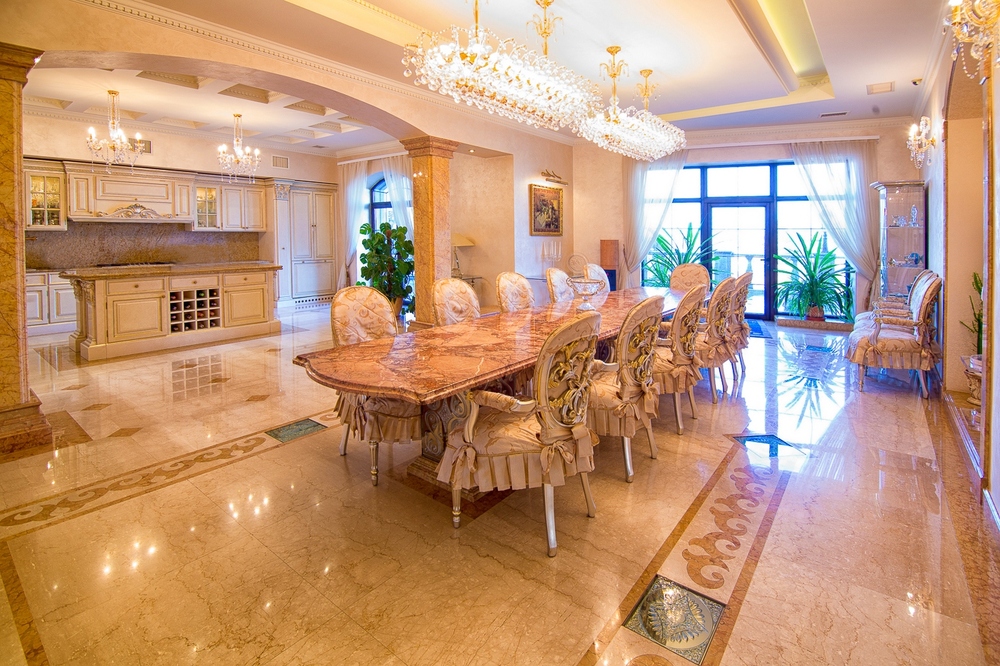
A worktop is one of the most heavily used elements in a kitchen. Every day, it comes into contact with water, food, dishes, hot cookware and cleaning products. The choice should therefore be based not only on colour and pattern, but also on hardness, water absorption, stain resistance and maintenance requirements. Natural stone offers extensive possibilities for households where the kitchen needs to remain functional for many years while also serving as an important part of the interior.
When planning a kitchen, the worktop should be considered together with the other surfaces. Cabinet fronts, flooring, wall cladding and metal details can significantly influence the overall appearance. A well-considered material selection begins with an assessment of the space and the way the kitchen will be used. Only then does it make sense to choose between individual types of stone.
What Properties Does a Natural Stone Worktop Have?
A stone worktop can have different characteristics depending on the type of stone, surface finish and thickness. Natural material has its own pattern, colour transitions and subtle structural variations. Every worktop therefore has an individual appearance. On larger surfaces, the pattern can be planned so that individual sections connect visually.
The position of the sink, hob and other openings also needs to be considered. These areas require precise processing. The thickness of the material, support structure and joint design are equally important. For long worktops or kitchen islands, technical details are planned during the measuring stage so that the finished structure remains stable while maintaining a clean appearance.
Marble Worktop for an Elegant Interior
Marble has remained popular because of its distinctive pattern and wide range of colours. A marble worktop can look subtle when featuring light tones and delicate veining, or become the dominant element of a kitchen with a contrasting pattern. The material works well in both classic and contemporary interiors.
Marble requires more attention to everyday maintenance. The material is more sensitive to acidic substances and certain types of contamination. Wine, citrus juices and vinegar may affect the surface if left in contact with it for an extended period. Suitable impregnation and appropriate cleaning products help preserve its appearance. Marble is particularly suitable for clients who want a distinctive natural material in the kitchen and are prepared to provide the necessary care.
Granite Worktop for Intensive Everyday Use
Granite is one of the materials suitable for kitchens with high levels of daily use. A granite worktop provides high hardness and good resistance to mechanical stress. With proper processing, it can withstand everyday food preparation while retaining its natural pattern and depth of colour.
Granite should not be selected based solely on its colour. Individual varieties differ in structure, porosity and appearance after processing. A polished surface emphasises colour and pattern, while a more matt finish creates a calmer visual effect. When making a choice, it is useful to examine a larger sample or the actual slab, as a small sample may not fully reveal the character of the material.
Quartz Worktop for Modern Kitchens
A quartz worktop is a solution for clients looking for a distinctive appearance combined with practical properties. A distinction should be made between natural quartz and industrially manufactured composite materials containing a high proportion of quartz. Technical characteristics should therefore always be assessed according to the specific product.
In a modern kitchen, quartz can create a clean, uniform surface or reproduce the appearance of marble. One advantage is the wide selection of colours and the more predictable appearance of large surfaces. However, the manufacturer’s recommendations should be followed when placing hot objects on the worktop, and suitable protective mats should be used. Even a highly resistant material is not intended for unlimited exposure to extreme heat.
Made-to-Measure Worktop for the Kitchen Layout
Every kitchen has its own dimensions and specific requirements. A made-to-measure worktop can be adapted to walls, kitchen islands and individual appliances. In unusual layouts, it is possible to accommodate curves, cut-outs, connections and overhangs according to the individual design.
Made-to-measure stone worktops require precise measurements before production. Even a small deviation can affect the positioning of the sink or hob. The measuring process therefore includes checking walls, cabinets, openings and areas where the worktop will connect with other kitchen elements.
What to Consider During Installation
The installation of a stone kitchen worktop involves several sensitive stages. The finished element must be transported safely, positioned correctly and precisely connected with the surrounding parts of the kitchen. Large worktops can be technically demanding to handle, so the installation process is planned according to dimensions, weight and access conditions.
Before installation, dimensions and the condition of the supporting structure are checked. Cut-outs, joints and connections are then completed. A properly executed joint should be visually discreet while providing sufficient stability. Particular attention is required around the sink, hob and wall cladding, where moisture can accumulate during everyday kitchen use.
Professional installation involves precise measurements and technologies appropriate for the specific type of stone. The final result depends on material quality, processing and installation. Even a high-quality worktop can look unsuitable if joints or transitions between individual surfaces have been poorly designed.
How Much Does a Stone Worktop Cost?
The price of a stone worktop is determined by several factors. The type of material, thickness, dimensions, number of cut-outs, edge processing, surface finish and installation complexity all affect the final cost. An unusual island shape or a requirement for precise pattern matching can also increase the overall price.
For this reason, the calculation should be based on the specific project. A price per square metre may not include all the work required to complete the worktop. An accurate quotation can be prepared after the material has been selected, measurements have been taken and the required processing has been defined.
Stone Worktops for Projects in Slovakia
Stone worktops in Slovakia are used in private kitchens, luxury apartments and representative properties. Modern layouts often feature large kitchen islands where the natural pattern of the stone can become a central design element. In smaller kitchens, a more understated worktop can complement light-coloured or wooden cabinets.
In Bratislava, the choice of worktop is increasingly considered as part of the overall architectural concept of the interior. Worktops in Bratislava range from simple straight surfaces to large islands with integrated cut-outs and custom details. In premium projects, attention is also paid to the direction of the stone pattern, edge finishing and the connection between the worktop and wall cladding.
Luxury stone worktops can have a highly distinctive character, but the best result is achieved when the material respects the architecture of the room. Premium stone worktops do not necessarily have to become the most prominent element of the kitchen. In some interiors, a restrained pattern works better and provides a coherent foundation for the other materials.
When selecting a stone worktop, aesthetic expectations should be combined with practical requirements. PREMIUM STONES provides the selection, processing and installation of stone worktops according to the specific kitchen layout. A professional approach makes it possible to assess material suitability, plan the required processing and create a solution that matches both the interior design and everyday use.