

Installation of Stone Cladding: What to Pay Attention To
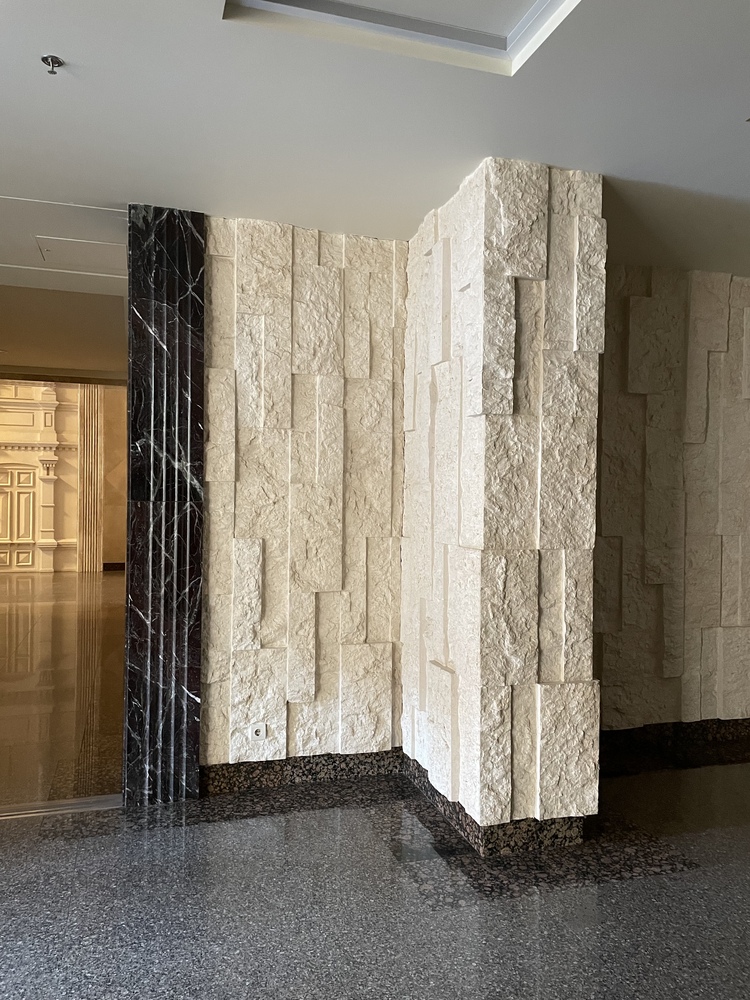
When installing stone cladding, the quality of the substrate, the correct choice of material and strict adherence to the installation technology are crucial. The finished surface must safely withstand the conditions to which it will be exposed while fitting naturally into the architecture of the building. Before starting the work, we therefore assess the condition of the wall, its flatness, absorbency, strength and the expected load.
Choosing the Material for a Specific Surface
Stone cladding can differ in thickness, weight, texture and water absorption. In interiors, the choice is often based on appearance, maintenance requirements and the overall style of the room. Marble cladding gives a space a distinctive pattern and elegant character. Granite cladding is valued for its hardness and resistance to mechanical stress. Travertine cladding has a natural appearance and combines well with wood, plaster and metal.
Natural stone cladding should be selected according to the location where it will be installed. Material intended for an exterior wall must withstand rain, frost, sunlight and temperature changes. In interiors, maintenance, contact with water and the overall visual effect are more important. The choice of material should therefore be based on the specific building rather than only on a photograph or sample.
What to Check Before Façade Installation
Stone cladding for a façade requires a strong and cohesive substrate. Old peeling layers, cracks, dust or unsuitable coatings can reduce adhesion. Before bonding, the surface is cleaned, levelled where necessary and prepared with an appropriate primer. For heavier elements, the need for mechanical anchoring is also assessed.
Stone house cladding must be designed with the entire wall structure in mind. The installation process includes corners, window sills, reveals, the plinth, upper terminations and connections with other materials. The price of stone cladding for a house therefore depends on several technical factors rather than on the surface area alone.
For interior projects, stone cladding can create a feature wall or a subtle architectural detail. Modern interior stone cladding often uses larger formats, more precise joints and a simpler pattern. In a living room, a stone wall can highlight the television wall, the area behind the sofa or another architectural element.
Heat-Exposed Surfaces Require Special Attention
Stone cladding around a fireplace must be selected with temperature changes in mind. The design must follow the instructions provided by the heating appliance manufacturer, the recommendations for the adhesive and the required clearances. Expansion joints are also important so that the movement of materials during heating and cooling does not cause cracks.
Before installation, we primarily check:
- the strength and flatness of the substrate,
- the absorbency and cleanliness of the surface,
- the weight and format of individual elements,
- the anchoring method and required curing times,
- the connection of the cladding with surrounding structures.
Installation Technology Affects Durability
Stone cladding in Bratislava can cover a small area near an entrance or a large part of a house. Each project begins with a layout plan. This approach helps distribute colour and texture differences between individual pieces and prevents visually unsuitable concentrations of similar elements.
A stone façade requires precise positioning, consistent joints and properly executed connections. Mechanical securing is particularly important on larger surfaces. Stone façade installation includes continuous checks of the surface plane, element positioning and the quality of the connection with the substrate. After installation, the surface is cleaned and, depending on the type of stone, may be treated with a suitable protective coating.
The price of a stone façade is determined by the material, surface area, building height, wall complexity, number of openings, amount of cutting and fastening method. The price of stone cladding can therefore vary considerably between two projects with the same surface area if their technical conditions differ.
The Façade Should Respect the Architecture of the House
A stone façade in Bratislava can have either a modern or traditional character. When designing the overall appearance, the colour of the roof, windows, doors and other surfaces should be taken into account. Stone house cladding in Bratislava can highlight an entrance, plinth or selected part of the façade without covering the entire building.
Stone façades in Slovakia are made from materials with different properties, so one installation method cannot automatically be applied to every type of stone. Natural stone façades in Slovakia must be adapted to the climatic conditions and construction of the particular building.
Marble façades in Slovakia have a prestigious appearance and work particularly well on architecturally distinctive buildings. Granite façades in Slovakia provide high durability and a pronounced texture. Luxury stone façades can be designed with restraint so that the material remains the main visual feature. Modern stone façades often combine stone with smooth plaster, wood or metal elements.
What Professional Assessment Includes
During an inspection, we assess the condition of the substrate, accessibility of the work area, building height and façade complexity. The transport and handling of heavier elements are also taken into account. Such an assessment makes it possible to determine the installation procedure more accurately and prepare a realistic estimate without unnecessary assumptions.
When planning stone façades in Bratislava, the visual result is considered alongside the technical requirements. Premium stone façades stand out when corners, joints and transitions between individual surfaces are executed precisely. Stone façade cladding in Slovakia must also take frost resistance, water absorption and protection against moisture penetration into account.
Details Determine the Final Appearance
Maintenance should also be considered during the design stage. Some types of stone require regular impregnation, while others naturally change their shade and develop a patina over time. Stone façade cladding should be selected so that its properties correspond to the conditions of the particular building.
Natural stone for façades can create a durable and distinctive surface when installed correctly. However, stone façade cladding must have properly designed connections and protection for exposed areas. Every project therefore requires attention not only to the installation itself but also to the details that determine stability and appearance after completion.
PREMIUM STONES provides professional stone cladding installation with a focus on substrate preparation, the correct choice of technology and precise finishing of details. Each building is assessed according to its construction and intended use. This approach makes it possible to combine the natural beauty of stone with a technically reliable result.